
INSIDE INNOVATION
Why High-Definition Data Streaming is the New Standard for the Space Economy
11th February 2026
Jump to:
The space industry has undergone a fundamental shift. We have moved beyond the era of exploration missions led by national agencies and into a robust, commercial space economy. Today, we don’t just visit space; we build, move, and work there to support life on Earth.
As our ambitions scale, our visibility must keep pace. In the early days, we celebrated any image we could get, even if it was a grainy, stuttering thumbnail. In the modern era of orbital logistics operations, low resolution or low frame rate imagery significantly affect the operations or the mission success.
As 1080p at 30fps video capture becomes the gold standard for satellite missions, we aren’t just looking for prettier pictures. We are looking for the precision required to sustain a multi-billion-dollar industry.
Real-Time Asset Monitoring
When you have a multi-million-dollar asset in orbit, you need to know exactly what is happening to it. Small-form-factor Full HD (FHD) video cameras provide the visual feedback necessary to support informed decision-making both on-orbit through smart edge processing systems and on the ground.
- Success Beyond the RF Waterfall: Making first contact with a spacecraft never gets old. Rather than sharing a complex RF waterfall graph that requires explanation, imagine sharing FHD video of your much-loved spacecraft with customers, investors, and the media.
- Operational Self-Awareness: When a spacecraft is hundreds of kilometres away, visual data is invaluable. Monitoring the deployment of antennas, solar sails, or panels allows operators to make informed decisions based on the actual state of the hardware.
- Spacecraft “Dash-Cams”: Space is increasingly crowded. If a spacecraft encounters an incident or debris, high-definition video serves as a “dash-cam,” providing critical evidence for legal or insurance purposes and helping organizations plan recovery efforts.
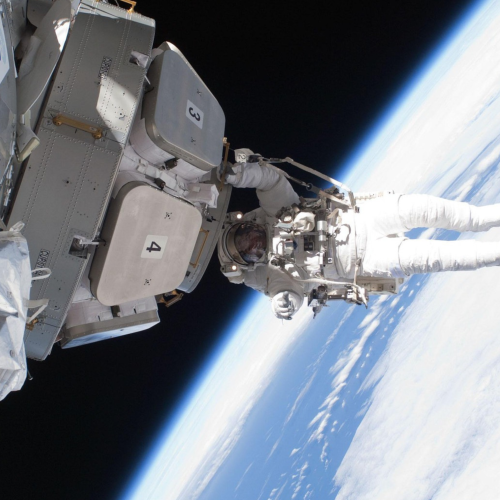
Image Credits: NASA
RPOD & Navigation
Rendezvous, Proximity Operations, and Docking (RPOD) are the backbone of the new space logistics and services market. This emerging sector requires precise situational awareness to ensure safe navigation and control.
- Visual Navigation: Whether it is a rover navigating unknown terrain or an on-orbit docking mission, operators and autonomous systems require detailed, real-time imagery to support obstacle avoidance and alignment.
- Visual Assurance for Stakeholders: The space economy involves diverse stakeholders, from regulatory bodies to private investors. Providing visual proof of operational success, such as the exact moment a payload is deployed or a novel refuelling technology is tested, is vital for meeting contractual requirements and building trust.
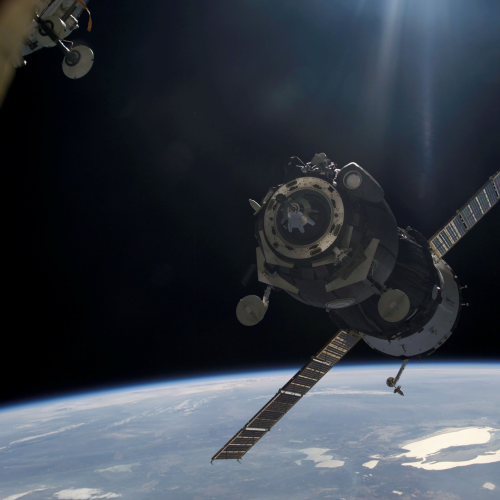
Image Credits: NASA
In-Space Manufacturing and Robotics
We are now 3D printing in a vacuum, using robotic arms to assemble modular structures, and deploying autonomous systems to capture space debris. Just as machine vision supports manufacturing on Earth, high-quality imagery is essential for robotics in orbit.
- Closing the Control Loop: In-space manufacturing relies on either autonomous loops or human-in-the-loop control. Visual feedback is a critical input that ensures the process is functioning correctly.
- Beyond Simple Sensors: While proximity sensors and IMUs are important, imagery enables advanced machine vision capabilities. This ensures that manufactured goods or assembled structures meet strict quality specifications.
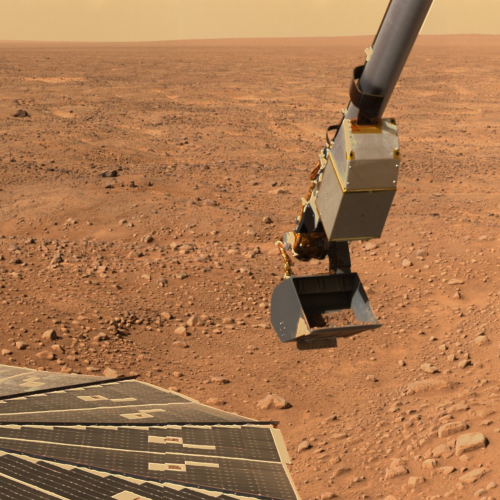
Image Credits: NASA
Conclusion
Better video isn’t just about “pretty pictures.” It is about providing the timely, detailed information necessary for space safety, precision, and reliability. As we build complex systems to support humanity, our vision systems must be as sharp as our ambitions.
How could your next mission benefit from Full HD video streaming? To learn how Infinity Avionics can support your mission with high-definition vision systems, reach out to us at info@infinityavionics.com.
Disclaimer: Images featured in this article are provided courtesy of NASA and are intended to illustrate the potential applications of FHD camera technology in space environments.